


Cat Runner: Decorate Home
Ivy
The first time I played Cat Runner: Decorate Home, I understood the appeal almost immediately. It combines a quick endless runner with a light home-decoration layer, so I could jump into a short run, collect rewards, and then spend a little time making the cat’s room feel more personal. That loop is easy to understand, friendly in tone, and well suited to the kind of spare minutes when I want something more active than a puzzle but less demanding than a large role-playing game.
What surprised me was how much the two parts depend on each other. The running is the source of the momentum, while decorating gives that momentum a reason to continue. On its own, the runner can feel familiar; on its own, the room would not offer much to do. Together, they create a simple habit: play a few rounds, improve the space, and return later to see what can be changed next. Whether that habit lasts beyond the novelty depends on how comfortable you are with repetition and gradual progress.
Why the first week feels so inviting
The opening experience is approachable because the game does not ask me to learn a complicated role-playing system. I can focus on the immediate path, react to obstacles, and collect what appears during a run. The cat theme keeps the presentation cheerful, while the home-room element gives the rewards a visible destination instead of leaving them as abstract numbers. For a younger player or someone who rarely plays mobile games, that clarity is a real strength.
Related News
Hero Wars: Alliance – Unleash Strategy and Magic

Why Masha and the Bear Pizza Maker Is a Cultural Phenomenon

Why Super Stylist Fashion Makeover Is a Must-Play for Fashion Lovers
I also found the short-session design practical. If I have a few minutes while waiting for an appointment, I can play without committing to a long quest or remembering a complicated story. A typical everyday use is playing one or two runs during a coffee break, then using the results to make one small change at home. That rhythm makes the game easy to pick up after a gap, because I do not need to reconstruct a plot or study a build before starting again.
The early decoration progress helps prevent the first sessions from feeling empty. Even a small visual change can make the room feel more like my own, and that personal touch is more motivating than simply watching a score rise. I think this is where the game works better than a plain runner: it gives casual play a sense of accumulation. The trade-off is that the running itself remains the main activity, so anyone expecting a deep interior-design simulator may find the room side lighter than imagined.
Related News

Why WhatsApp Messenger Still Makes Everyday Communication Feel Easy

Jurassic World: The Game Is the Better Dino Tycoon for Strategic Players

Threads in Real Life: Who Should Join, Lurk, or Leave

How SHEIN Turned Shopping Into an Endless Content Feed

How to Make Fortnite Feel Smarter on Mobile

Should You Switch to Microsoft Outlook on Mobile?
Controls are most comfortable when I keep my attention on the immediate movement rather than trying to plan too far ahead. That sounds obvious, but it affects how I play: I prefer short, focused sessions with the phone held securely, rather than treating the game as background entertainment. When I am tired or distracted, mistakes arrive quickly. The bright, uncomplicated presentation makes the game feel relaxed, but the runner still asks for timely reactions.
The role-playing label is useful mainly as a description of progression and personalization, not as a promise of a traditional adventure with extensive dialogue, party management, or tactical combat. I would recommend it to someone who likes the feeling of developing a character and a space without wanting a large ruleset. I would not recommend it to a player searching for a story-heavy role-playing game, strategic battles, or a world to explore at a slower pace.
Its broad audience is reflected in its age rating of Everyone. I can see why it fits family-friendly play: the central idea is easy to explain, the cat theme is approachable, and the decoration angle avoids the harsher tone found in many action games. Still, younger players may need guidance around optional purchases, especially because the game is free to start and includes paid items. The fact that a game is suitable for Everyone does not automatically make every spending decision suitable for every household.
Gallery
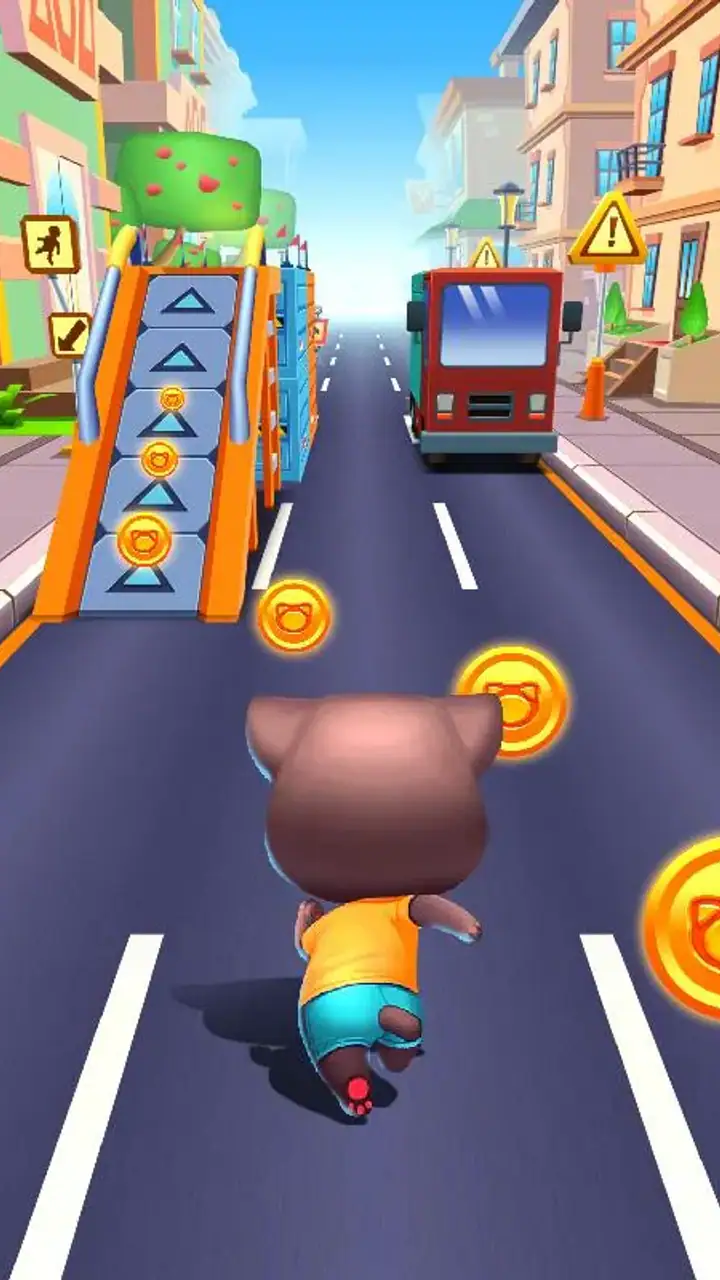
The game comes from Ivy and has been available since November 3, 2017. That gives it a longer history than a newly launched runner, and its audience is substantial: it has passed 100 million installs, with an average rating of 4.4 from roughly 731 thousand ratings. Those figures suggest that the basic formula has reached many players, but they do not guarantee that it will suit someone who dislikes repeated runs. In my experience, the real question is not whether the first hour is enjoyable; it is whether the decorating goal remains meaningful once the initial surprises are gone.
How I would approach the first sessions
I would avoid spending immediately during the opening period. The best way to judge the game is to learn how often I naturally return, how much I enjoy the running when I am not chasing a new decoration, and whether the room changes feel worth the effort. Because in-app purchases range from $0.99 to $19.99 per item, a short trial without buying anything gives a clearer picture of the core loop.
I also recommend treating the first week as a test of attention rather than a race to unlock everything. Playing in small blocks makes it easier to notice whether the game fits your routine. If you only enjoy it when a new reward is close, that is useful information: the long-term appeal may be limited. If you still like making runs after the room has received several changes, the game has a better chance of becoming a comfortable regular.
What remains after the novelty fades
After the first month, the decorating layer becomes the main test. Early progress is naturally satisfying because every improvement feels visible. Later, the same system has to provide enough direction to justify another run. I found the strongest recurring value in the combination of personal expression and quick play, not in the runner’s basic movement by itself. The room gives me a reason to return, while the short runs keep that return from feeling like a major commitment.
That value is best for players who enjoy incremental goals. If you like collecting resources, making gradual visual changes, and checking in often, the game can settle into a pleasant routine. It works particularly well as a low-pressure companion to a busier day. I can play briefly, make a small amount of progress, and leave without feeling that I have abandoned a complicated campaign.
The limitation is that the core action can become predictable. Endless runners usually depend on repetition with changing obstacles, speed, and personal improvement, but the basic gesture of avoiding danger and gathering rewards remains familiar. If your enjoyment comes from mastering a demanding control system or discovering new mechanics, the game may not provide enough variety for a permanent place on your phone.
Compared with a standard endless runner, this one has a more tangible reward loop. A conventional alternative may offer a cleaner focus on score, distance, and reflexes, which can be better for competitive players who want to improve performance above all else. Here, I am more willing to accept a simple run because it feeds the home-room goal. In exchange, the game can feel less satisfying if I want every session to challenge my skill in a new way.
Compared with a dedicated decorating game, it offers less time spent directly arranging a space and more time earning the ability to do so. A pure design game is the better choice for someone who wants to experiment with layouts, colors, and furniture without an action layer between decisions. This title suits me more when I want decoration to be connected to play rather than to be the entire experience.
Compared with a larger role-playing game, it is far easier to maintain. There are fewer systems to remember and less pressure to keep up with a story, characters, or a complex inventory. That simplicity is valuable on a phone, but it also means there is less narrative weight and less strategic depth. I would choose it for a relaxed routine, not as a replacement for a substantial adventure.
Small habits that make the loop work better
One useful approach is to separate “running time” from “decoration time.” I get more enjoyment when I finish a few focused runs before changing the room, instead of interrupting every attempt to check the next reward. This makes the decorating feel like a payoff and also helps me notice whether the action is enjoyable on its own.
Another practical habit is to set a personal stopping point. Because the game is built around repeatable sessions, it is easy to continue simply because another run is available. I prefer deciding in advance that I will stop after a small block or after completing a particular goal. That keeps the game from turning a short break into an unplanned stretch of repetitive play.
I also think it is worth judging decorations by personal satisfaction rather than by the urge to complete everything. If the room is the part that keeps you interested, choose changes that make the space feel distinctive to you. If you are only collecting because an icon suggests that you should, the reward loop may start to feel like work. This is a small distinction, but it determines whether the game feels personal or mechanical over time.
For families, I would discuss purchases before handing the game to a child. The free entry point is convenient, but optional items can make the boundary between playing and spending less obvious to a younger user. A simple rule—play first, decide later—helps preserve the game’s casual character and makes it easier to see what can be earned through normal use.
The maintenance burden of keeping it installed
The maintenance burden is relatively low in terms of mental effort. I do not need to remember a complicated schedule or rebuild a team after every break. Returning after several days feels more manageable than returning to a deep role-playing game with multiple unfinished objectives. That makes it a good candidate for people who want a game they can pause without penalty in their own routine.
However, low mental maintenance does not mean zero friction. The game still asks for repeated attention, and its value depends on continuing to care about the next room improvement. If I stop caring about the decoration, the runner has to carry the entire experience. For me, that is where the long-term burden appears: not in complexity, but in deciding whether another similar session is worth my time.
The current version is 5.4.9, and the minimum operating-system requirement is Android 6.0. That makes it accessible to many older Android devices, although actual comfort will still depend on the phone’s performance and screen responsiveness. I would keep the game updated when possible, but I would not choose it solely because it can run on an older device. Smooth reactions matter in a runner, and a phone that struggles with touch input can make the experience frustrating even when the software requirement is met.
Storage and notification habits are also worth considering in ordinary use. I prefer keeping optional game alerts restrained, because a casual runner should fit around my day rather than repeatedly interrupt it. If you enjoy frequent reminders and check-ins, those prompts may support the habit. If you already have too many games competing for attention, limiting interruptions helps reveal whether you genuinely want to return.
The free price is a clear advantage for testing the game without commitment. At the same time, the purchase range means the long-term cost depends on self-control and expectations. I would not describe spending as necessary for deciding whether the game is enjoyable, and I would be cautious about buying simply to speed up a moment of impatience. The strongest version of the experience, in my view, is one where purchases remain optional rather than becoming the reason I continue.
Where long-term fatigue begins
The most obvious source of fatigue is repetition. Running, collecting, and decorating form a clean loop, but clean loops can become easy to predict. The game is at its best when I want a familiar activity; it is weaker when I want surprise every time I open it. Players who need constant mechanical novelty should approach it as a casual side game rather than a main gaming destination.
Another source of fatigue is the gap between visible decoration progress and the effort needed to reach the next satisfying change. Early rewards feel frequent because the room is new. Later, a small visual improvement may require more patience with the same running routine. That does not make the system unfair by itself, but it changes the emotional balance: I start asking whether I am playing for enjoyment or merely to reach the next item.
The game can also be a poor match for people who dislike reflex-based controls. Even though the tone is gentle and the age rating is Everyone, avoiding obstacles still requires concentration. Someone looking for a completely passive decorating experience would likely be happier with a design-focused alternative. Likewise, a competitive runner fan may prefer a title built around leaderboards or precision rather than room customization.
I noticed a subtler trade-off in the way customization can narrow my attention. Once I decide what kind of room I want, rewards that do not fit that style may feel less useful, even if they are perfectly functional within the game. That can make progress feel slower than it objectively is. The best way around it is to stay flexible and treat unexpected items as part of the room’s evolving character instead of waiting for one exact look.
There is also a difference between a game that is easy to revisit and one that is genuinely compelling for months. This title succeeds at the first task more reliably than the second. Its accessible sessions, friendly theme, and room progression make it easy to keep installed. Whether it earns regular play depends on how much satisfaction you get from small improvements after the first-week excitement has passed.
Who should skip it
I would skip it if my main goal were a rich role-playing story, complex character development, or tactical decision-making. The game uses role-playing ideas in a lighter, more casual way, so it should not be judged as a substitute for a full-scale adventure. I would also skip it if I already know that endless runners quickly bore me, because the decorating layer does not remove the need to repeat runs.
I would be cautious if I wanted a completely offline-feeling experience with no purchase considerations or if I was choosing a game for a child without setting spending boundaries. The free entry is helpful, but the presence of optional items means it deserves the same basic supervision as other free-to-play games. For adults who can manage that boundary, the cost-free starting point makes experimentation easy.
My long-term verdict on Cat Runner: Decorate Home
After looking beyond the first burst of charm, I see Cat Runner: Decorate Home as a dependable casual game rather than an endlessly deep one. Its strongest idea is the connection between active runs and a room that gradually becomes more personal. That gives ordinary spare-time play a visible purpose, and it is the reason I would recommend trying it to someone who likes cute presentation, short sessions, and incremental customization.
The game earns lasting space when I treat it as a small daily habit, not as a complete role-playing experience. A few focused runs, a modest decorating goal, and clear spending limits keep the loop pleasant. If I demand constant innovation, deep strategy, or a powerful narrative, its simplicity becomes a weakness. If I want something easy to understand and easy to put down, that same simplicity becomes its best feature.
Its audience size and 4.4 average show that the formula has broad appeal, but my recommendation is still personal: try the free version long enough to see whether the runner remains enjoyable when a new room change is not immediately available. That is the honest test. The game is free, rated Everyone, and supported by Ivy, so the barrier to trying it is low; the real investment is your attention.
My final judgment is positive with a clear condition. Keep it installed if the room gives your runs meaning and you enjoy returning to small, visible progress. Remove it if every session starts to feel like repeating the same task for a reward you no longer care about. For the right player, it is a cheerful, low-pressure way to fill short breaks. For everyone else, a more specialized runner, decorating game, or story-driven role-playing title will probably provide stronger long-term value.
FAQs for Cat Runner: Decorate Home
What is the main objective of Cat Runner: Decorate Home?
In Cat Runner: Decorate Home, players engage in endless running gameplay while collecting coins and rewards. The primary goal is to use these collected items to decorate and customize your virtual home. The game combines the thrill of endless running with creative home design elements, offering a unique and engaging experience.
Is Cat Runner: Decorate Home free to play?
Yes, Cat Runner: Decorate Home is free to download and play. However, it does offer in-app purchases that can enhance the gameplay experience by providing additional coins, special items, or other benefits. Players can enjoy the game without spending money, but optional purchases can speed up progress.
What are the system requirements for Cat Runner: Decorate Home?
Cat Runner: Decorate Home is compatible with most modern Android and iOS devices. For Android, it typically requires version 4.4 and up, while iOS devices need iOS 9.0 or later. It's recommended to have a stable internet connection and enough storage space for optimal performance and updates.
Can I play Cat Runner: Decorate Home offline?
While Cat Runner: Decorate Home can be played without an internet connection, some features may be limited. Offline play allows for basic gameplay, but to access certain updates, events, and in-game purchases, a stable internet connection is necessary. Online connectivity enhances the overall experience with regular updates.
Are there any parental controls in Cat Runner: Decorate Home?
Cat Runner: Decorate Home is designed to be family-friendly, but it does include in-app purchases. Parents can use device settings to restrict purchases and manage screen time. Additionally, reviewing the game’s privacy settings and content can help ensure it aligns with parental preferences for their children.
Pros
- Engaging endless runner gameplay.
- Customizable home decoration options.
- Vibrant and colorful graphics.
- Frequent updates with new content.
- Suitable for all age groups.
Cons
- In-app purchases can be pricey.
- Requires internet for some features.
- Ads may interrupt gameplay.
- Progression can feel slow.
- Limited character customization.


